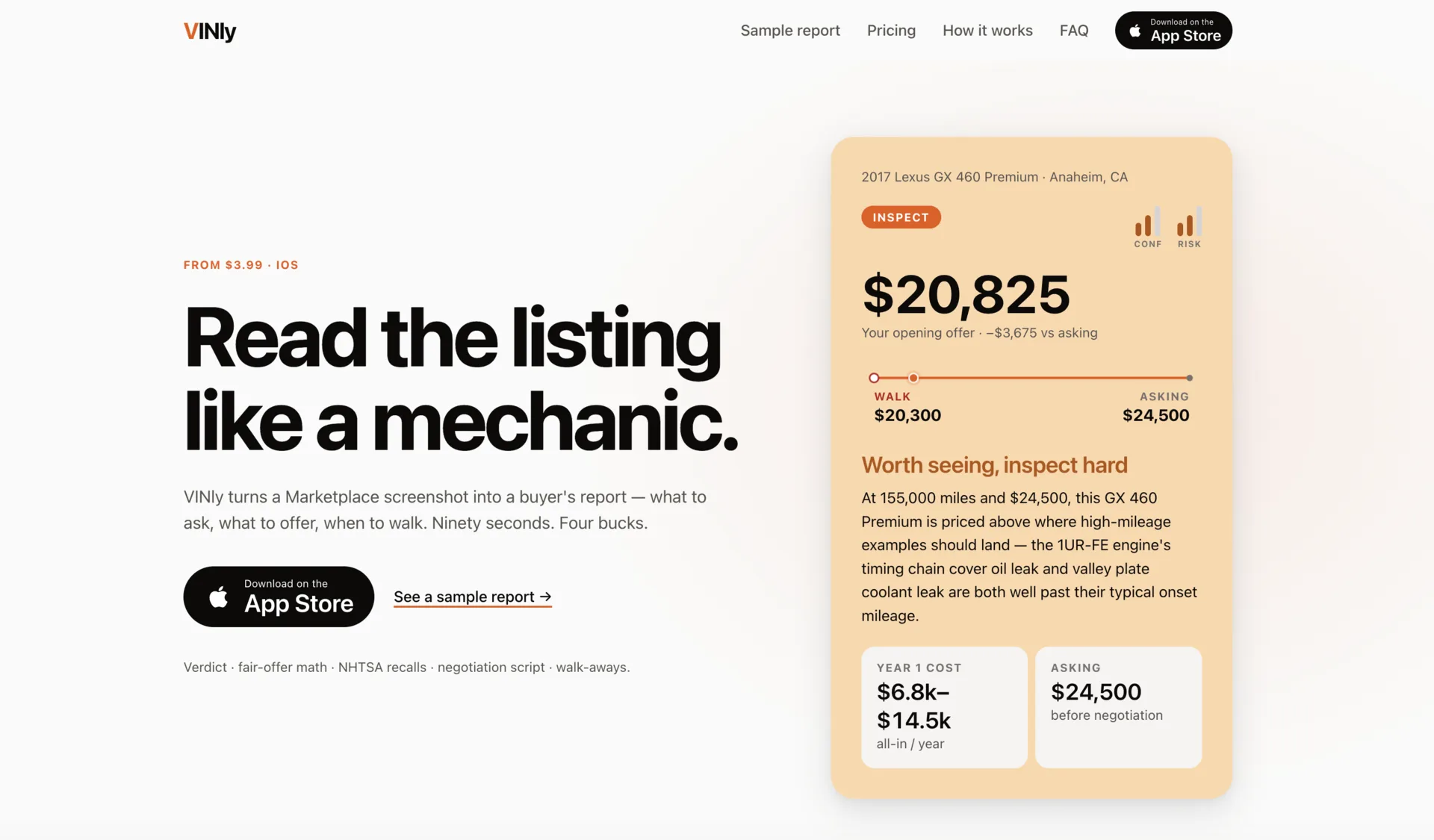
VINly
Scan a VIN, get the car's public safety record free: recalls, owner complaints, crash tests, fuel cost, and real listings nearby. Designed and engineered solo for iOS.

- Free Price
- NHTSA + EPA Government sources
- None VIN photos sent to a server
- One person Designed and built by
The premise
A used car is a stranger’s optimism with a price on it. The buyer has to work out what’s wrong with it, and most people guess: three tabs, half a forum thread, and an offer they can’t defend.
The strange part is that the information already exists and it is already free. Every recall, every owner complaint, every crash test is published by the federal government. It is just locked behind interfaces nobody wants to use, indexed by a VIN nobody wants to type, and scattered across agencies that do not talk to each other. Nobody assembles it in the ninety seconds before you message the seller.
What VINly does
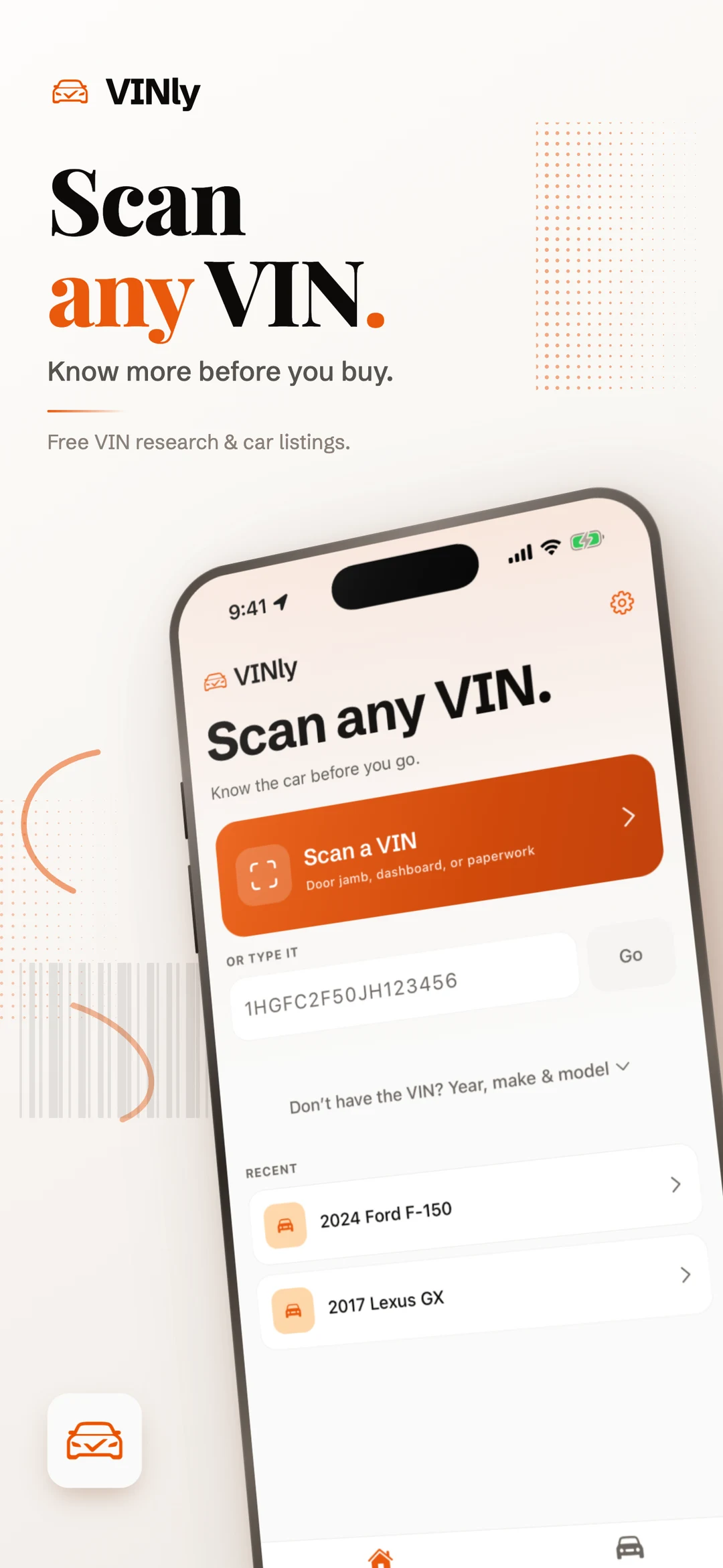
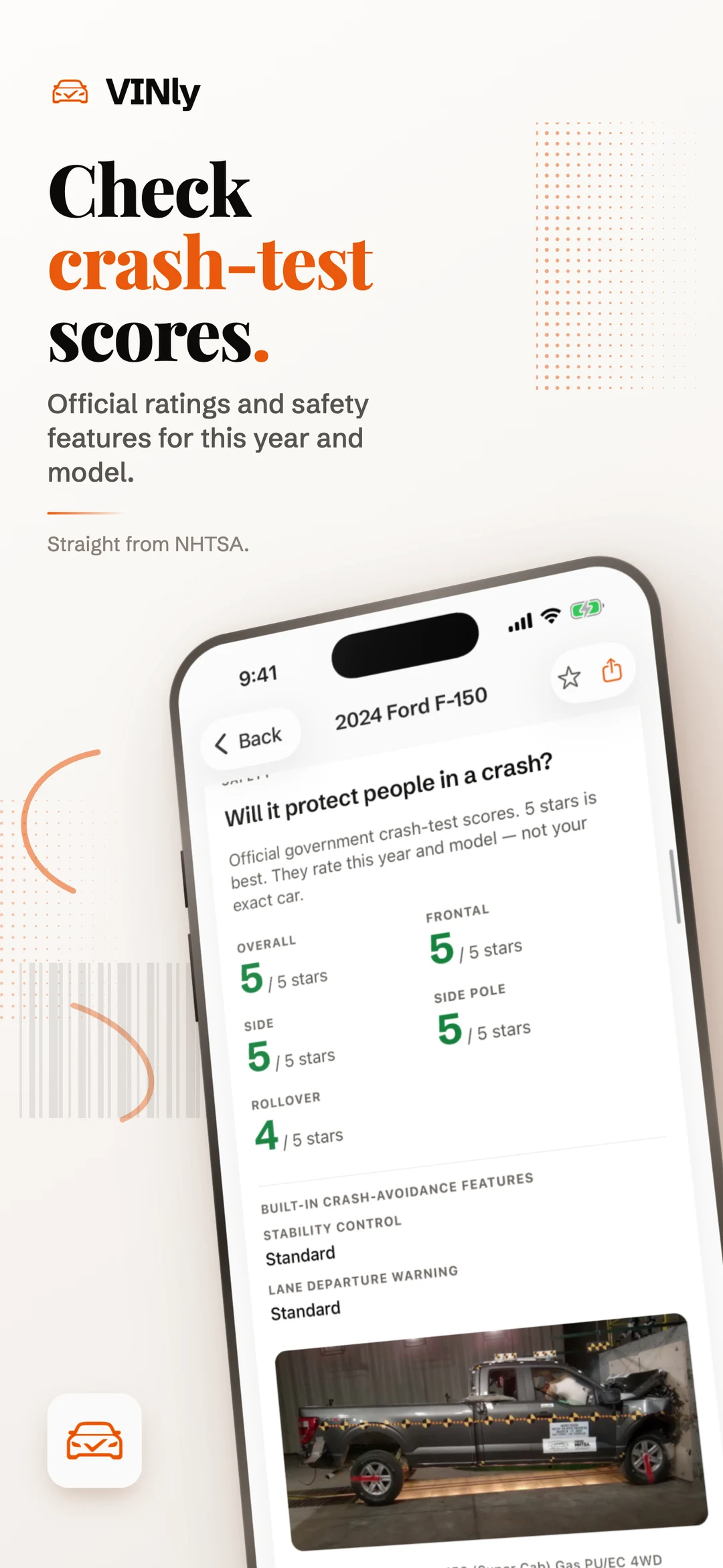
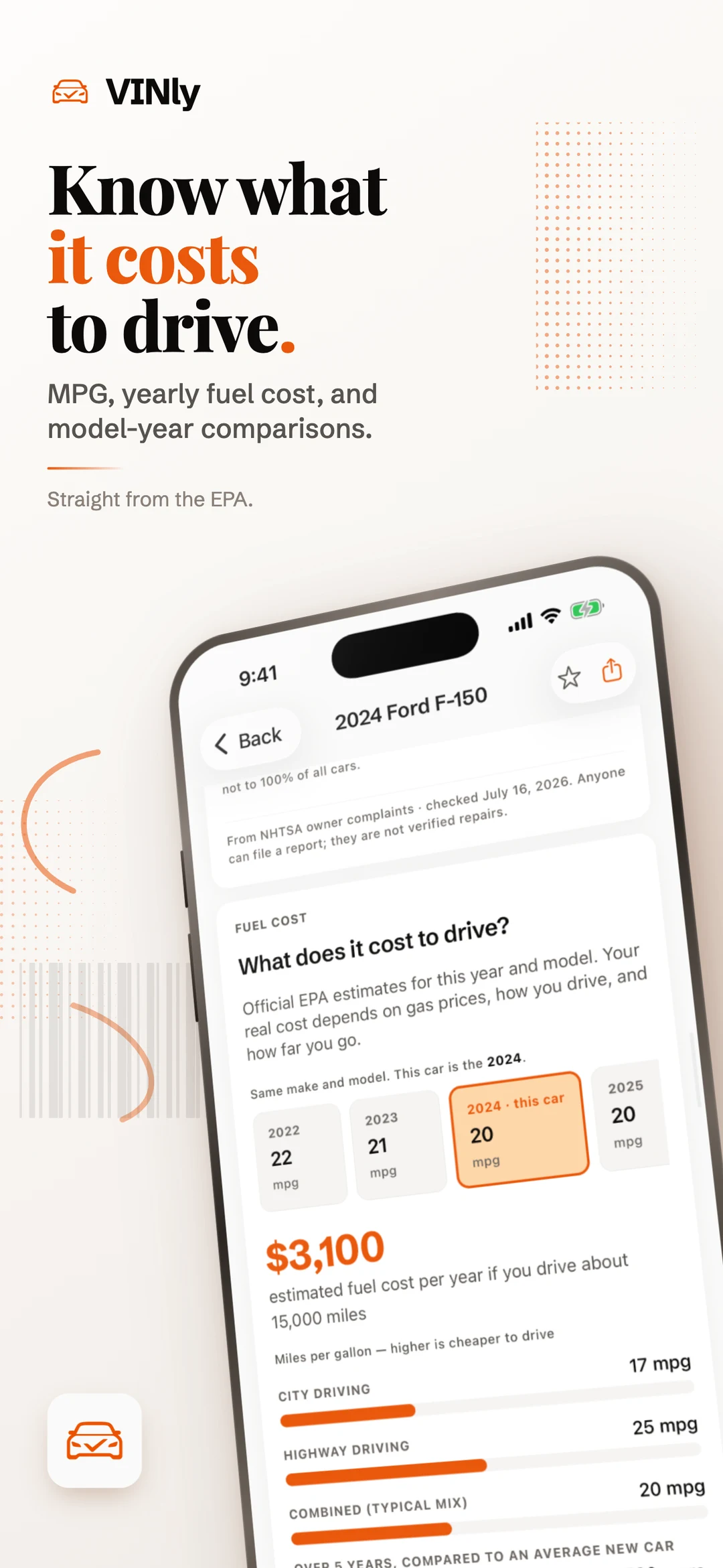
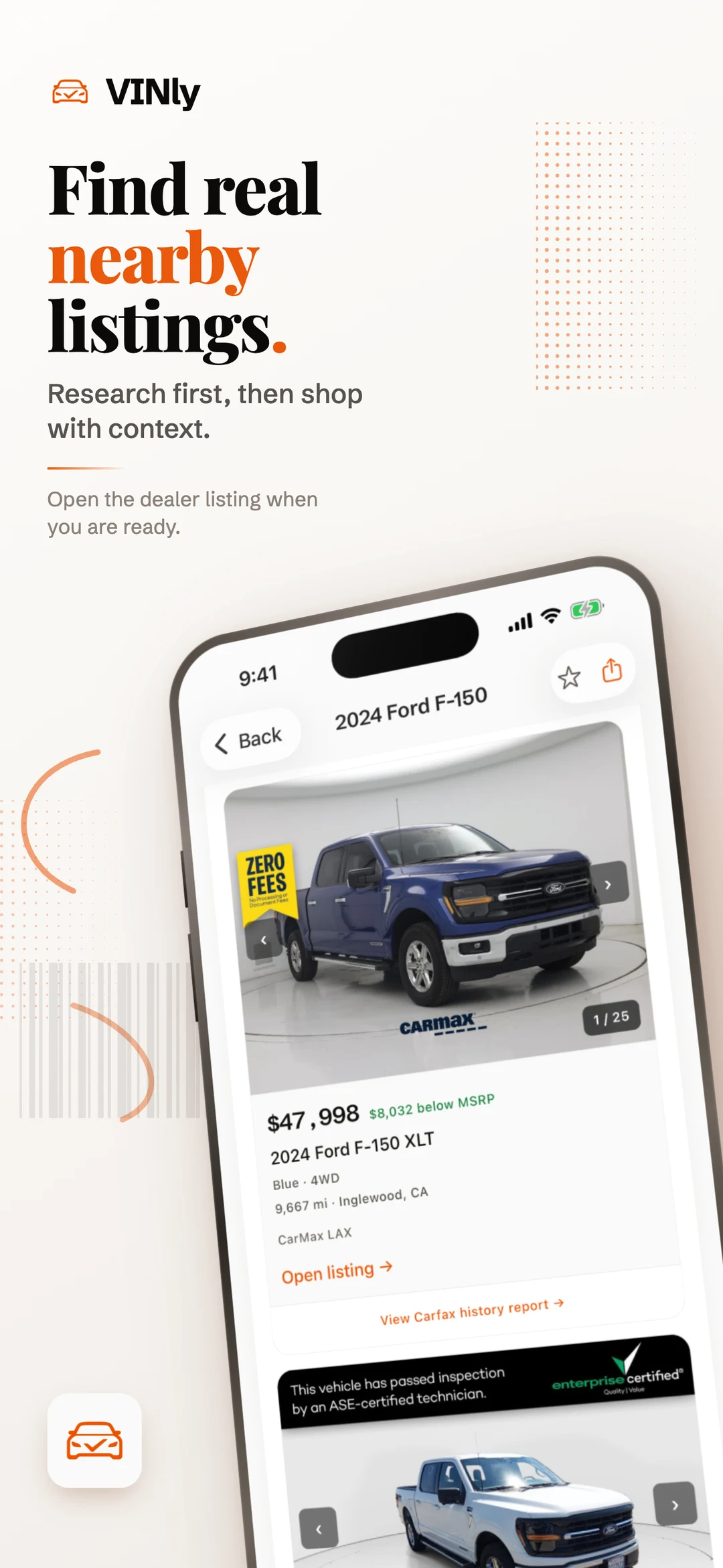
Point the camera at the VIN, on the door jamb or the dashboard or the paperwork, and VINly reads it. Then it returns that car’s public record: open recalls, what owners have complained about, crash-test ratings, real yearly fuel cost, and how this model year compares to the ones on either side of it. When you are ready to shop, it shows real listings for that model near you, with photos, prices, and a link to the dealer.
Free. No account, no subscription, no ads. The product is a bet that the fastest way to earn a car buyer’s trust is to help with the car already in front of them and charge nothing for it.
The VIN is the front door
The decision the whole app hangs on is that the VIN is the entry point, not a form field.
A VIN is 17 characters. It deliberately excludes I, O and Q so they cannot be confused with 1 and 0, and it carries a check digit in the ninth position. That check digit is the spine of the product. Every VIN, however it arrives, is validated against ISO 3779 arithmetic on the device before a single request goes out. A misread fails closed. The app would rather say it could not read the VIN than look up the wrong car.
Reading it happens two ways, both on the phone. The door-jamb barcode is decoded by the system scanner. When there is no barcode, the camera photographs the VIN text and Apple’s Vision framework reads the characters. The recognizer hands back raw text and nothing else; a shared engine finds the 17-character windows in it, repairs a single OCR confusion only when the check digit proves the repair correct, and throws away the rest.
What it refuses to claim
VINly is deliberately narrow, and saying so out loud is part of the design.
It is not a vehicle-history report. There is no accident record, no title or lien check, no odometer verification. It reports what the government publishes, which is safety data, not provenance. It says so on the page rather than letting the buyer assume otherwise, and it keeps carfax and history out of its own keywords for the same reason, at a real cost in search traffic.
It also refuses to be alarming. Recall counts are read against calm thresholds, because two open recalls is ordinary and treating it as a warning would be dishonest. Injury and fire mentions are normalized against total complaint volume, so a popular model is not smeared for being popular. Where the data is missing the app says Not rated, rather than drawing a dash and letting the reader fill in the blank themselves.
Nothing leaves the phone
An earlier version sent VIN photos to a server, where a vision model read the characters and handed back text.
It worked, and it was wrong. It cost money on every scan of a free product. It needed a network round trip while the user was standing in a parking lot with one bar. And it forced a Photos disclosure in App Privacy for something the phone could do by itself. Apple’s Vision framework does the same job on-device for nothing, offline, and privately. The photo path now never leaves the device, and the privacy answer went from a paragraph to a sentence.
The same instinct governs the backend. The keys that cost money never ship in the app bundle; they live as Edge Function secrets. And the functions that no longer serve a purpose do not sit there quietly. They get deleted, because an unauthenticated endpoint holding an API key is a bill waiting to be run up by somebody else.
One person, end to end
The design, the iOS app, the shared research engine, the Supabase backend, and the marketing site are one person’s work.
The engine is the part worth pointing at. VIN validation, recall thresholds, complaint normalization, and year-over-year comparison live in one TypeScript package that both the app and vinly.dev import. The website and the phone reach the same verdict about the same car because they run the same code. Two surfaces that disagree about whether a car is safe are worse than one surface that does not exist.
It would rather tell you it couldn't read the VIN than look up the wrong car.
Where the trust comes fromScan the VIN. Read the record.
Point the camera at a door jamb and the barcode decodes on the phone. What comes back is the car's public safety file, read in plain language, free.
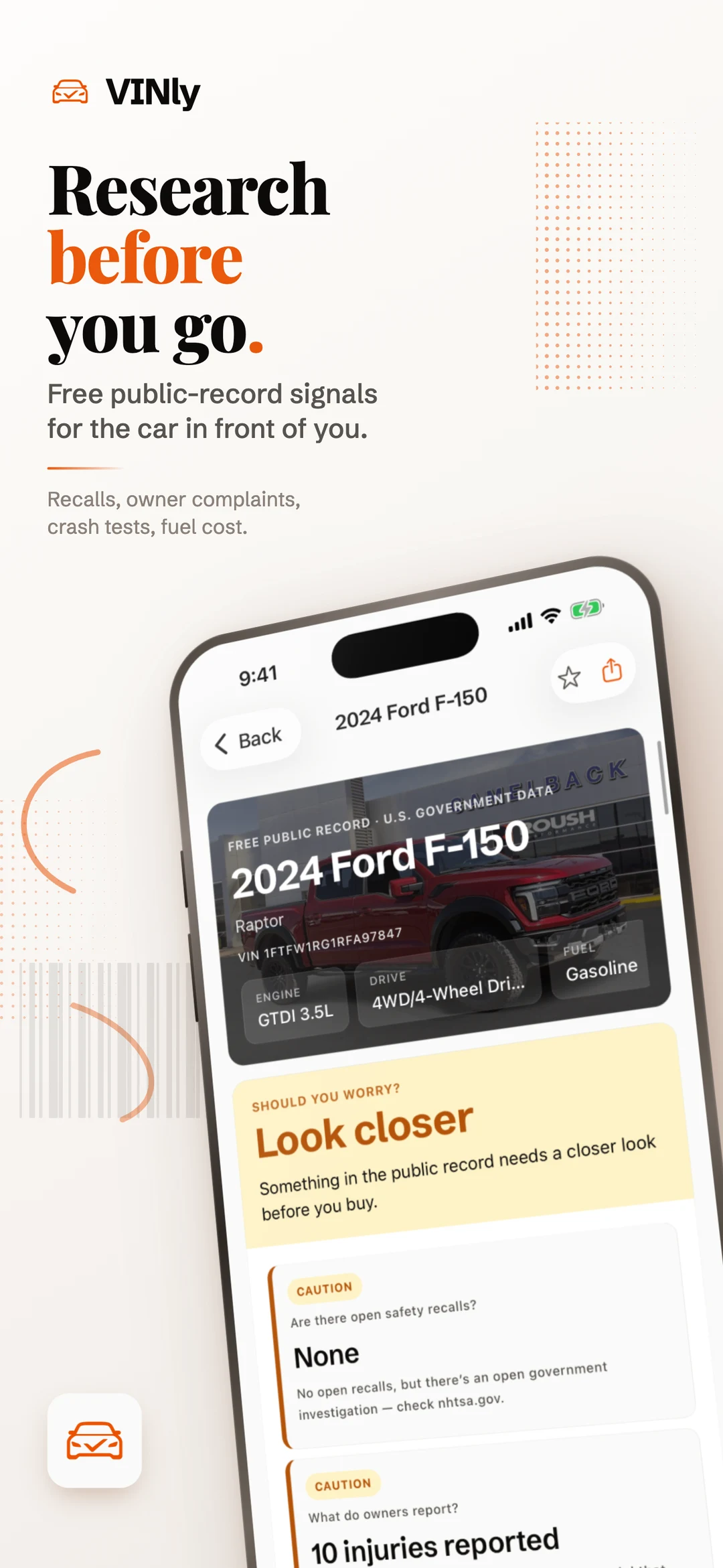
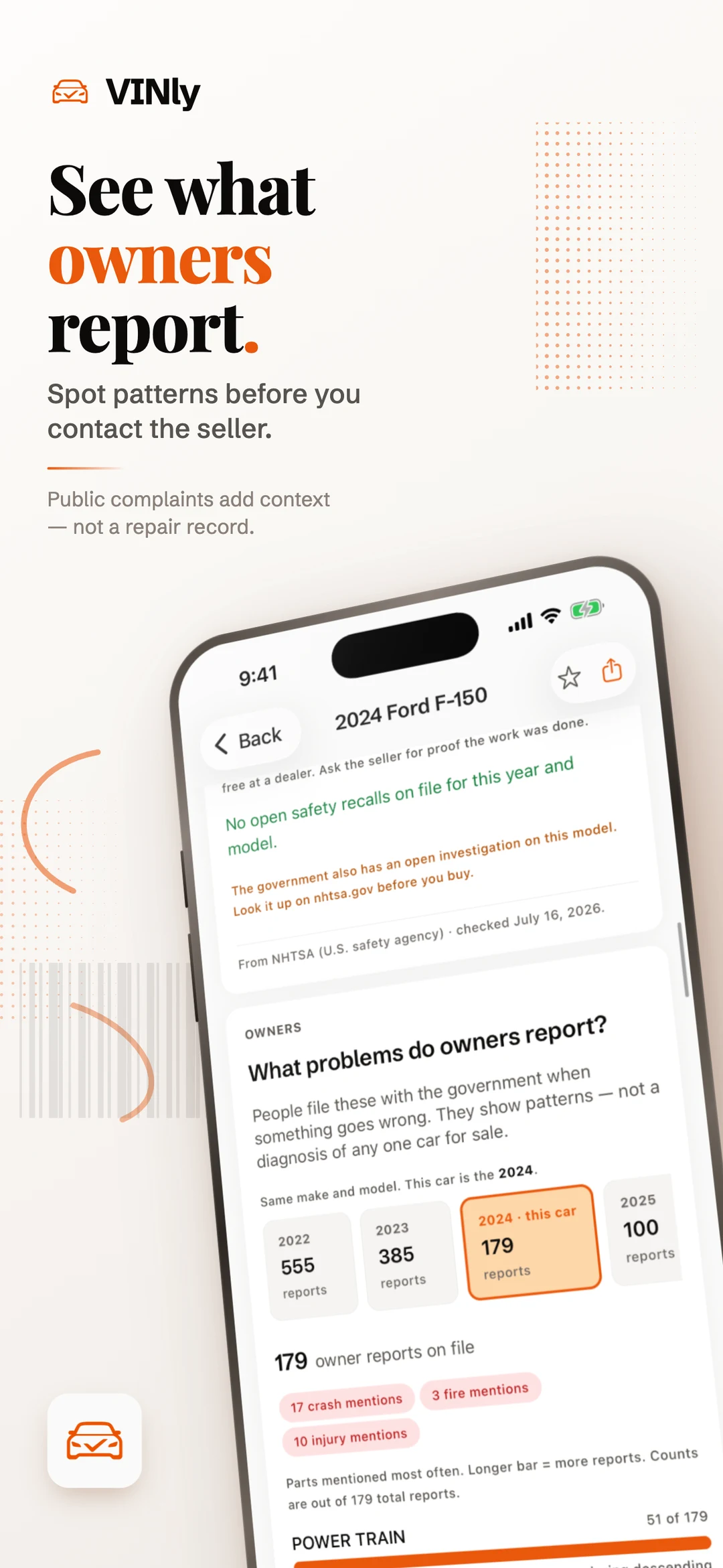
Crash tests, fuel cost, and where to find one.
Everything the federal government knows about the model, plus real cars for sale near you once the research is done.
Free, and narrow about it.
VINly charges nothing, holds no account, and shows no ads. It is also plain about what it isn't.

And the site that frames it.